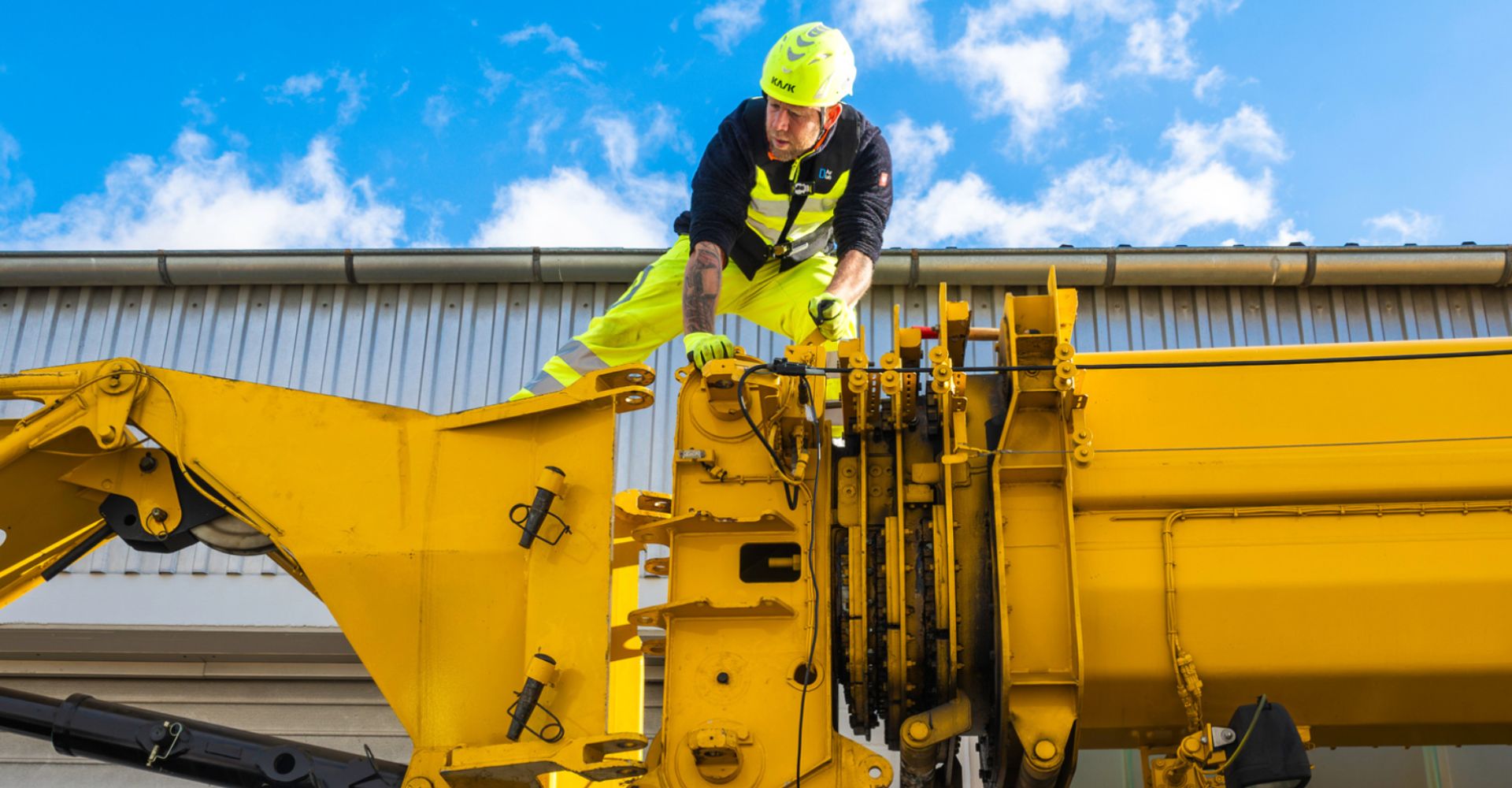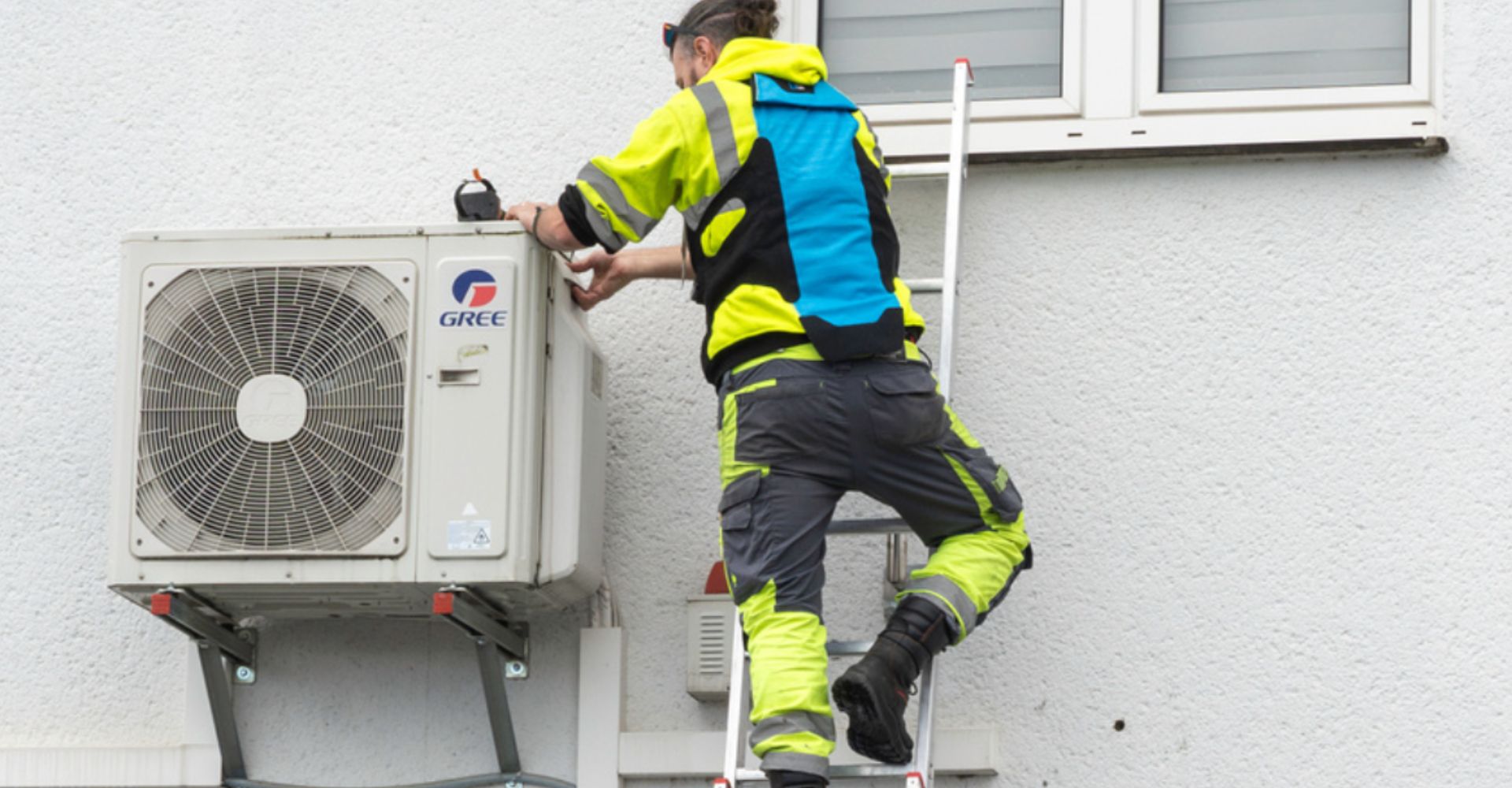
Safely working on ladders is a daily necessity for craftspeople and installers operating in civil and industrial contexts. Working on ladders, even at low heights, carries a real risk of falls from height with potentially serious consequences.
This technical guide provides practical advice on safe use of ladders , current legislation, operating techniques and personal protective equipment ( PPE ) that reduce the consequences of accidents.
Why working on ladders at height is dangerous
Falls from height do not only concern great heights. Working at height on ladders is one of the most frequent and underestimated activities. Studies on the phenomenon of falls in the workplace show that a significant proportion of serious injuries occur from even moderate heights (approximately 2–3 m or less), with significant injuries also recorded following falls from relatively low heights.1
Under these conditions:
- the impact is already sufficient to cause serious injuries
- the lack of collective safeguards increases the risk
- it is easy to lose your balance even during simple operations such as using tools or making lateral movements
Main risk factors of working on ladders
When working on ladders, the most common risks include:
- unstable or slippery surfaces, especially outdoors or in unequipped environments
- incorrect positioning of the ladder, with incorrect angle or support
- loss of balance when using tools
- manual carrying of loads while climbing, which reduces stability and balance
- working alone without the assistance of a colleague
A correct assessment of the risk of falling from a ladder is essential for implementing effective preventive measures .
Regulations for working on ladders
Working on ladders falls within the broader scope of working at height, and is regulated by Legislative Decree 81/08 – Consolidated Law on Safety at Work.
According to the law, when working at height the employer must:
- Assess the specific risk associated with, for example, the use of portable ladders in the operational context
- Eliminate or reduce the risk at its source , where possible, prioritizing safer alternative systems (e.g. platforms, scaffolding, trestles)
- Provide operating procedures for the use of ladders, with clear instructions on risks and preventive measures
- Train and educate workers, including enabling them to use ladders correctly
- Provide PPE that is appropriate to the individual risks
Safety on ladders for craftspeople or installers is not just good practice, but a specific regulatory requirement.
How to work safely on ladders: good operational practices
To work safely on ladders, it is necessary to adopt correct and standardized behaviors, with a particular focus on fall prevention .
- Choose the correct ladder: the ladder must be suitable for the height of the work to be carried out, stable and compliant with EN 131 regulations, equipped with non-slip bases.
- Correct positioning: ensure that the ladder is positioned at the correct angle (about 75°) and on a stable surface. Avoid soft, uneven or slippery surfaces.
- Three points of support: when climbing or descending, always keep two hands and one foot or two feet and one hand in contact with the ladder.
- Tool management: use lightweight tools or carrying systems (lanyards, bags) to reduce the risk of losing balance.
- Working with assistance: a colleague holding the ladder or receiving the tools can dramatically reduce the risk of a fall.
PPE for working at heights for those who use ladders
Personal Protective Equipment does not eliminate the risk of falling, but it mitigates the consequences if applied consistently with the risk assessment.
Useful PPE for those working on ladders:
- Protective helmets with chin guard
- Lightweight harnesses (where applicable)
- Non-slip footwear
- Ergonomic gloves
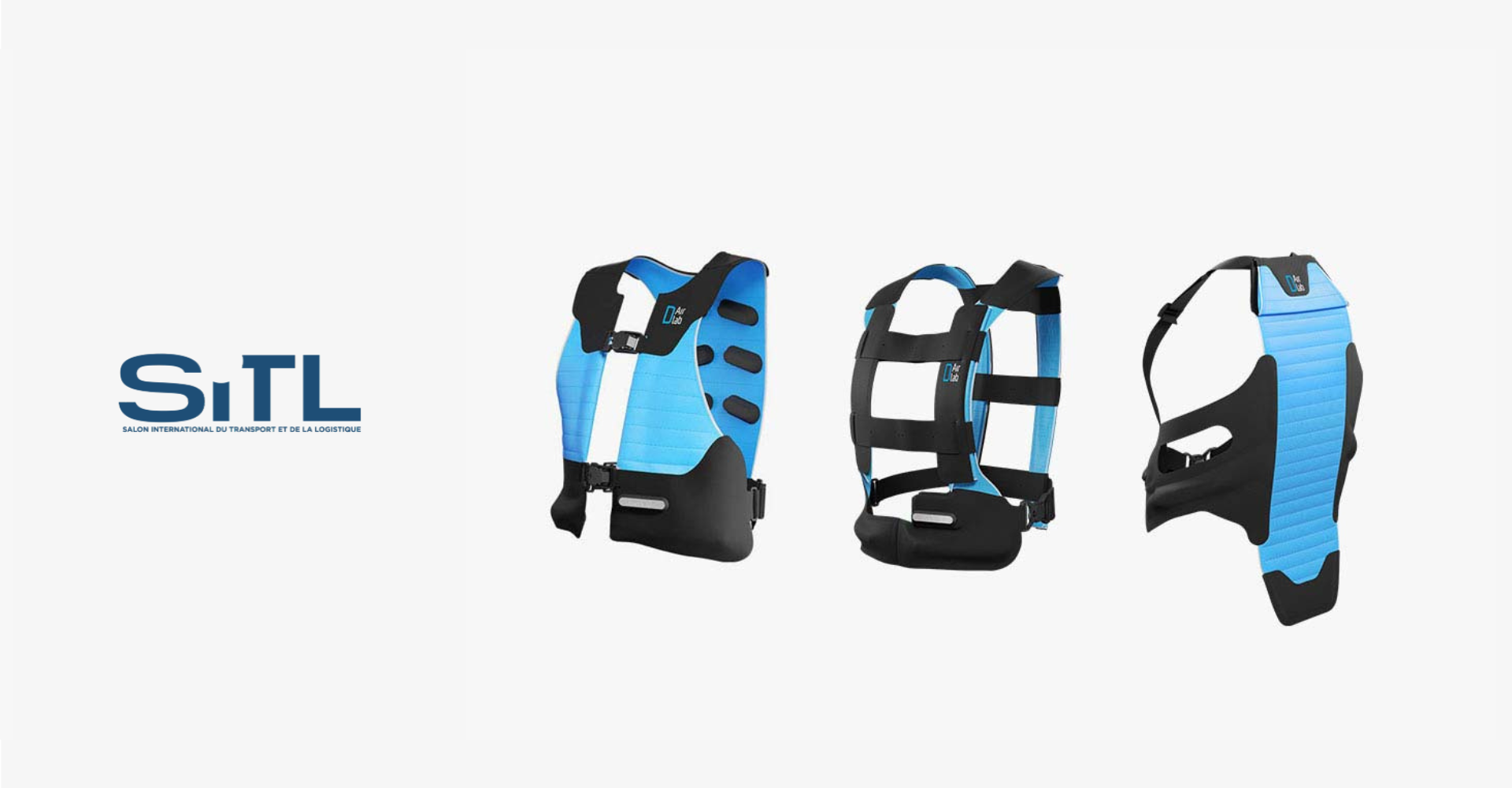
- Wearable airbag vest for work
The choice of PPE must be consistent with the risk assessment and the type of activity performed.
WorkAir: airbag vest for working at height
When working on ladders, where anchoring systems are often not present, it is useful to consider solutions that improve operator protection without limiting their movements.
WorkAir is a wearable airbag vest for work , designed as PPE for working at height, effective in reducing the consequences of a fall from height, without interfering with the work of the craftsperson or installer.
Main features:
- Lightweight, ergonomic design, does not restrict movement on ladders
- Automatic activation of airbag protection in the event of a fall
- Protection of vital areas most exposed to impact with the ground and vulnerable
- Suitable for variable operating conditions, without requiring fixed anchors
- Certified as category 2 PPE and reusable
Airbag devices for working at height such as WorkAir do not prevent falls but represent a useful solution for mitigating trauma, especially in operational contexts where other types of protection cannot be used.
Conclusion
Ladder safety at work requires an integrated approach based on:
- correct risk assessment
- choice of appropriate operating techniques
- use of appropriate and ergonomic PPE
Even limited heights can lead to falls from height with significant consequences. For this reason, it is essential to adopt all available measures to improve operator safety.
In addition to fall prevention , the use of innovative solutions aimed at mitigating impact can help reduce the severity of injuries during work at height on ladders .
Find out how WorkAir, the airbag vest for working at height, can help reduce the consequences of falls and improve ladder safety .
Contact us for a personalized consultation!
Sources
1 Health and Safety Executive (HSE)
Photo courtesy of Rathmann