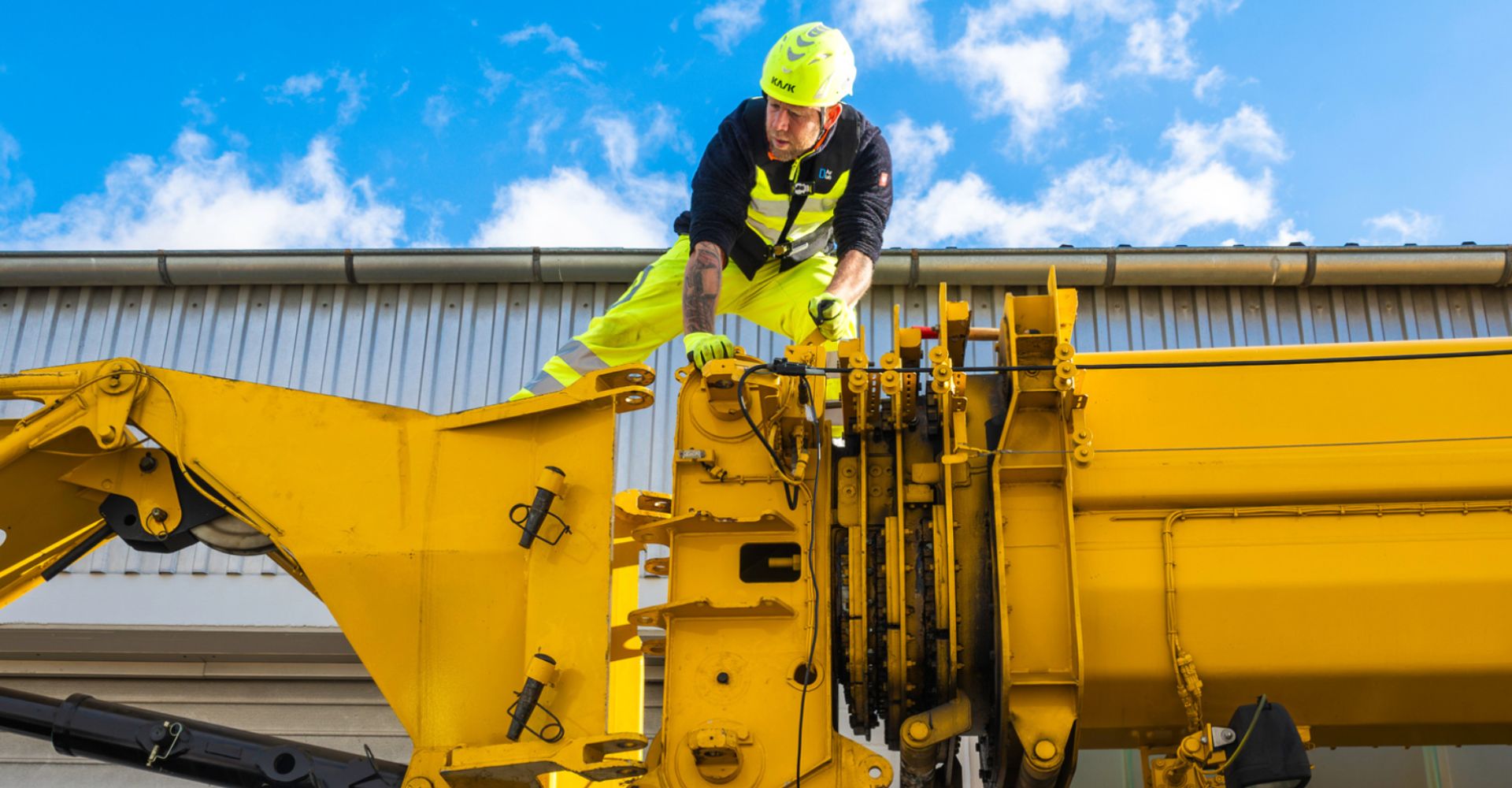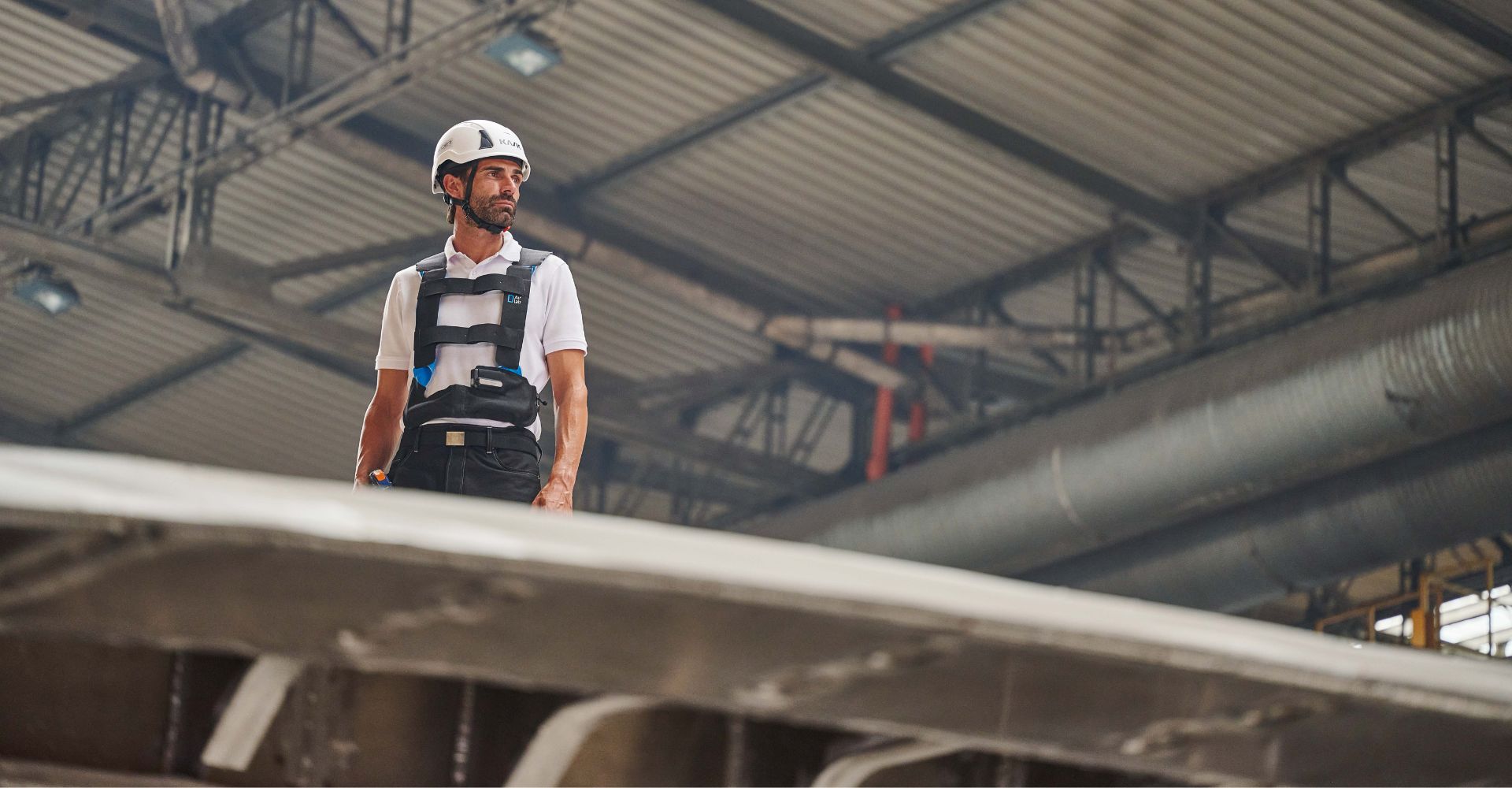
Industrial maintenance activities are among the most complex scenarios from a workplace safety standpoint. Work on machinery, production lines, plants, and in confined spaces often requires fast operations, with limited freedom of movement and conditions that are not always ideal for the full use of fall arrest systems.
In these contexts, fall risk is not tied solely to height, but also to the layout of the work environment and the reduced capacity to arrest movement in the event of a loss of balance.
According to leading European workplace safety reports, falls from height account for approximately 20–25% of fatal workplace injuries, with a significant proportion associated with industrial maintenance activities and technical interventions.1
In such contexts, fall arrest systems and traditional PPE must evolve to ensure real protection even where operational margins are minimal.
European Regulatory Framework and Personal Fall Protection Equipment Categories
To protect workers exposed to the risk of falls from height, especially in critical contexts such as industrial maintenance, the regulatory framework requires employers to select the most appropriate equipment to ensure maximum safety when working at height.
The core regulatory principle is the priority of collective protection measures over personal protective equipment, together with the need to select systems based on the operational context and foreseeable conditions, including abnormal and emergency situations.
At European Community level, Regulation (EU) 2016/425 classifies fall arrest systems under Category III: the highest protection class, reserved for risks that may result in serious injury or death. This classification imposes rigorous reliability standards, with the goal of minimizing residual risk.
Within this framework, technical standards (EN) define how fall protection systems operate as an integrated set of compatible components:
- Fall arrest harness: the element that supports the worker’s body.
- Connecting subsystem: the element that links the harness to the anchor point (lanyards, energy absorbers, self-retracting lifelines).
- Anchor point: the structural element compliant with UNI EN 795.
Only the perfect synergy of these elements, validated through a careful risk assessment, enables legal obligations to be properly met and workers’ lives to be genuinely protected.
How a fall arrest system works
Fall arrest systems feature three main components: fall arrest harness, connecting systems (e.g., fall arrest lanyard), connectors between the various components, and anchor point.
The role of the fall arrest lanyard
Connecting systems such as the fall arrest lanyard connect the operator to the anchor point and, in the event of a fall, work together with the energy absorber to reduce impact energy.
The concept of fall clearance
To function correctly, fall arrest systems require a minimum stopping distance, known as fall clearance. This space is essential in fall arrest devices, to allow the energy absorber to activate and reduce the forces transmitted to the body.
When working at height and in industrial maintenance scenarios in the real world, fall clearance represents one of the main operational limitations of fall arrest systems. Depending on the configuration of the fall protection system, the fall clearance required can vary considerably, reaching up to 6 meters, factoring in lanyard elongation, energy absorber activation, and body deceleration distance.2
When working at height and in industrial maintenance scenarios in the real world, fall clearance represents one of the main operational limitations of fall arrest systems. Depending on the configuration of the fall protection system, the fall clearance required can vary considerably, reaching up to 6 meters, factoring in lanyard elongation, energy absorber activation, and body deceleration distance.2
The fall factor directly affects the energy generated during a fall and therefore the effectiveness of:
- the fall arrest lanyard
- the energy absorber
- • the fall arrest harness
The most high-risk situations include:
- industrial maintenance on machinery
- work on production lines
- work in confined or narrow spaces
- activities with limited operational mobility
- operations near internal edges or technical platforms
In these scenarios, workplace fall prevention is not always sufficient to ensure complete protection for the operator.
The real risk in falls from a low height
One aspect that is often overlooked lies in the fact that many serious injuries do not result from falls when working at height, but rather falls from a low height or loss of balance in confined spaces.
A significant proportion of serious fall injuries occur in heights below 2–3 meters, demonstrating that severity is not exclusively correlated with fall height. 3
In these cases:
- the response time of personal fall protection equipment may be insufficient in low-height falls
- energy dissipation may be incomplete
- contact with surfaces or machinery occurs rapidly
The result is a significant residual risk even when personal fall protection equipment is correctly used. Residual risk from falls in industrial settings cannot be completely or simply eliminated.
Fall protection system limitations and new solutions for working at height
Fall protection systems are designed primarily for scenarios involving afall from height with sufficient vertical clearance and adequate fall clearance. However, the limitations of fall arrest systems become most apparent in industrial maintenance and working at height scenarios characterized by restricted operational space and low working heights:
In these contexts, even whenpersonal fall protection equipment such as safety harnesses for working at height, connecting systems like the fall arrest lanyard, and energy absorbers are used correctly critical conditions may still arise:
- stopping distance (fall clearance) is insufficient
- the fall arrest lanyard does not allow complete energy dissipation
- operator movement is partially restricted
- fall dynamics are not purely vertical
- the time for the fall arrest system to activate is limited
This creates a gap between the design offall arrest systems and the reality of working in these environments.
Integrating personal fall protection equipment with impact protection systems
In many industrial contexts, the total elimination of fall risk if not realistic, even whenpersonal fall protection equipment is used correctly. Thefall arrest harness, connecting systems (e.g., fall arrest lanyard), and energy absorber reduce risk but cannot eliminate it entirely in all operating conditions.
For this reason, approaches to safety when working at height are shifting toward a complementary approach to fall protection that incorporates solutions capable of intervening even after a fall has begun.
This second level of protection focuses on managing residual risk in scenarios where fall protection system limitations apply, such as confined spaces, low working heights, or insufficient fall clearance, which do not always guarantee complete protection. In these contexts, impact protection systems complement fall protection devices by reducing injury severity in the event of a fall.
Wearable airbags: fall protection
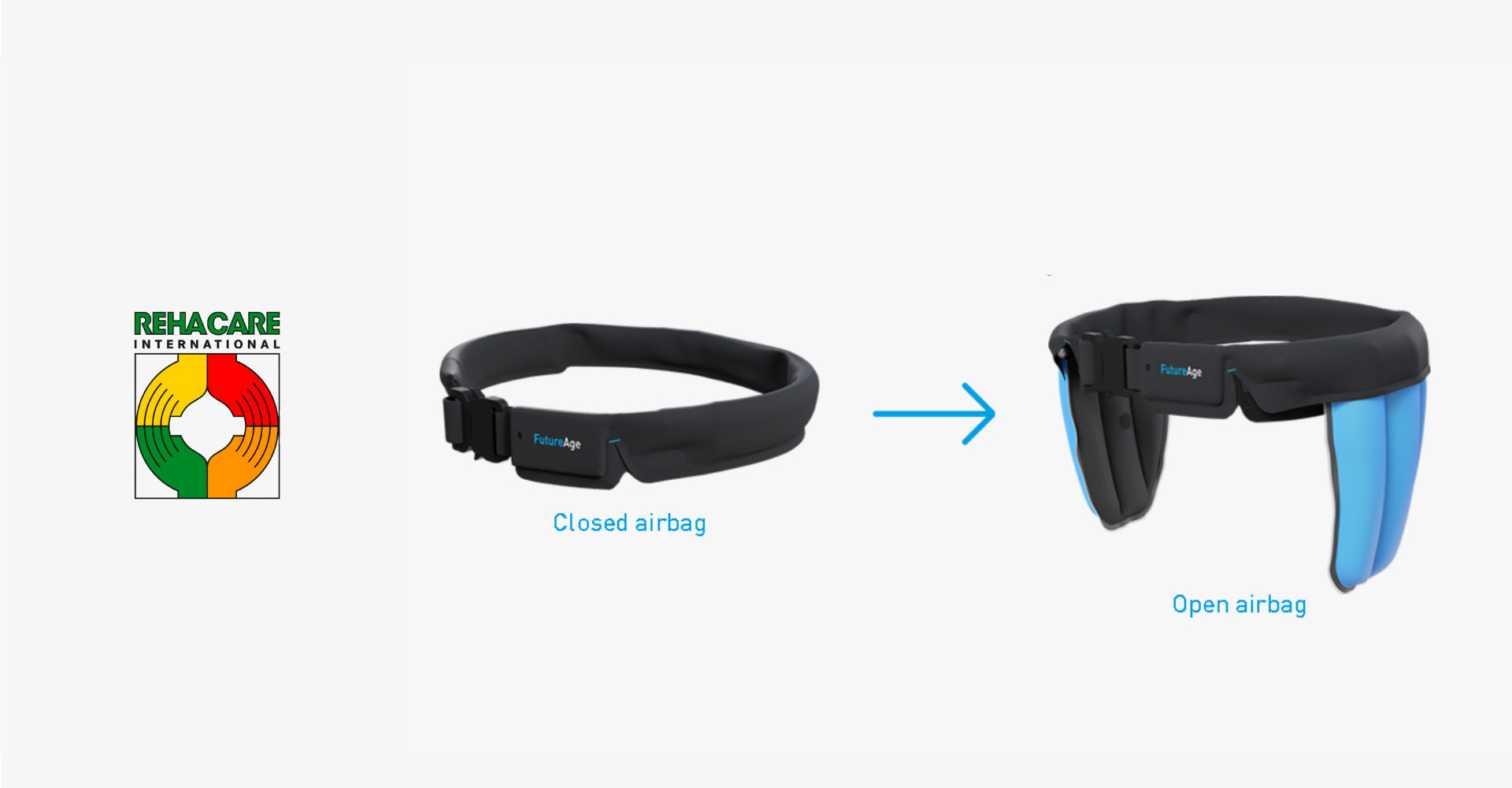
These wearable airbag devices represent a workplace safety solution designed to intervene at the moment a fall occurs and to reduce the energy transmitted to the body on impact. Unlike fall arrest systems, they do not depend on fall clearance or an anchor point to perform their protective function.
By means of integrated sensors, the system detects fall dynamics and deploys the wearable airbag vest extremely rapidly.
The system is designed for fall protection and mitigation of the consequences of impact, through:
- absorption of part of the kinetic energy
- protection of critical body areas
- reduction of impact injury severity
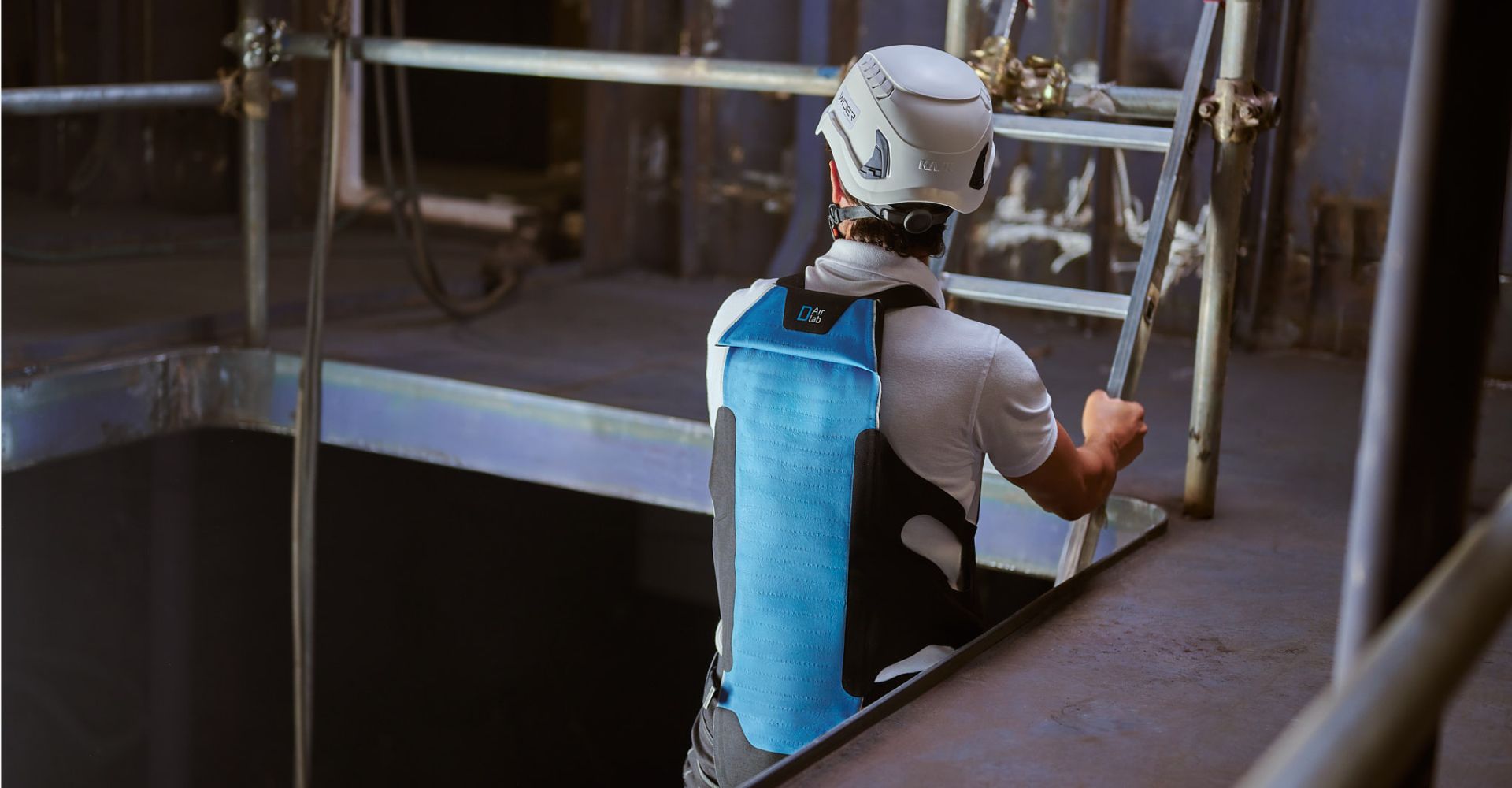
Airbag vests are designed to protect vital areas of the body when working at height, including the chest, back, and internal organs.
One of the key advantages is the ability to distribute impact energy over a large surface area, reducing localized pressure and contributing to the protection of internal organs.
This mechanism significantly reduces injury severity in the event of a fall.
WorkAir: fall protection in industrial maintenance
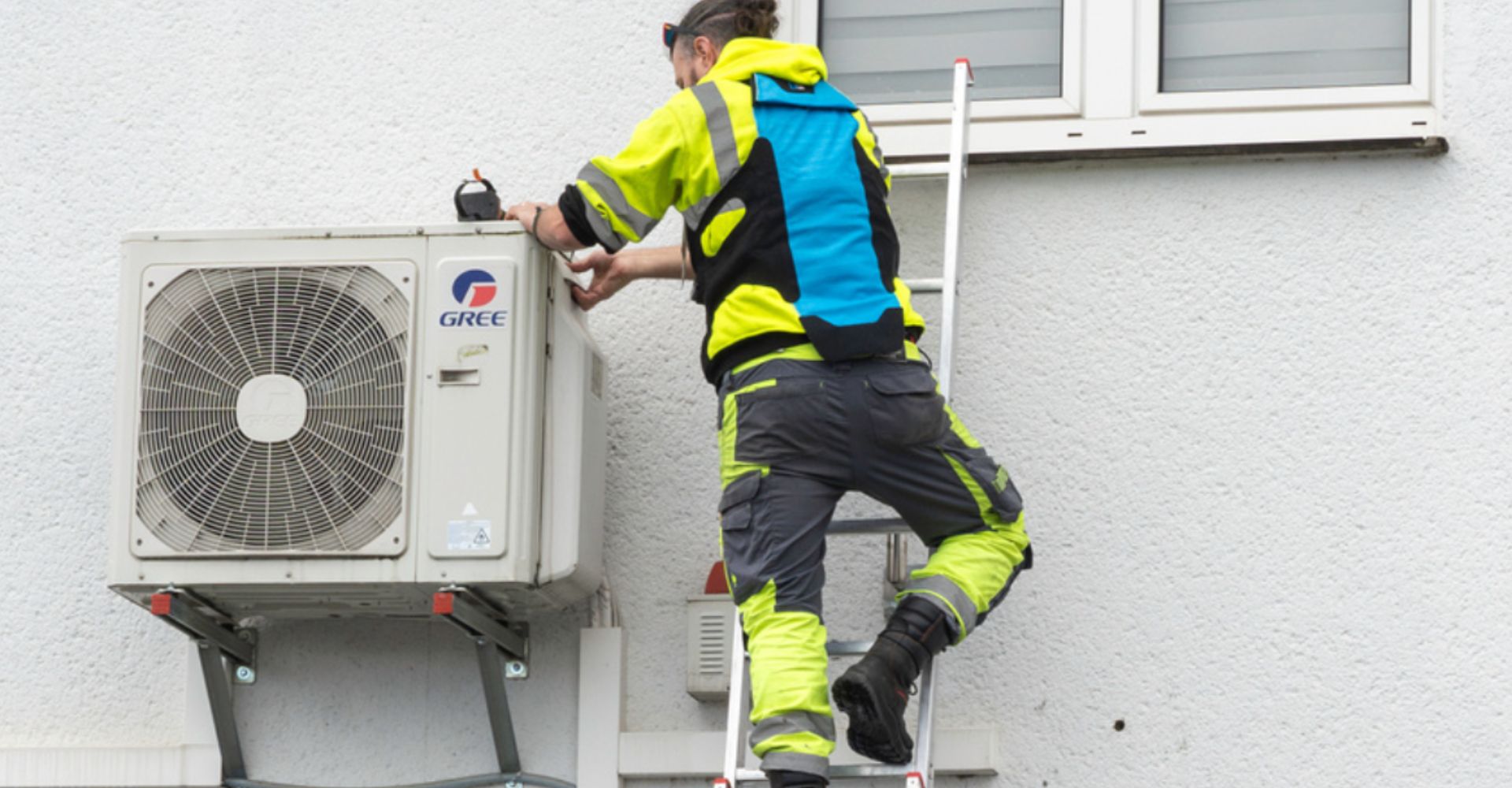
WorkAir is a range of wearable airbag vests designed as a certified Category 2 personal protective device (PPE). It is designed to protect the chest, back, and corresponding vital organs of those working at height and in industrial maintenance operations, intervening at the moment of impact in the event of a fall.
Its role is not to prevent the fall but to intervene at the moment of impact, reducing the physical consequences of the event and supplementing protectio Its role is not to prevent the fall but to intervene at the moment of impact, reducing the physical consequences of the event and supplementing protection in contexts characterized by residual risk. n in contexts characterized by residual risk.
Main features:
- Lightweight, ergonomic design, does not restrict operator movement
- Automatic activation of airbag protection in the event of a fall
- Protection of vulnerable vital areas most exposed to impact with the ground
- Protection of vulnerable vital areas most exposed to impact with the ground
- Certified as Category 2 PPE
- Reusable following a reset procedure
WorkAir is particularly suited to contexts where the limits of fall arrest systems are most evident, such as:
- industrial maintenance on machinery and plants
- working environments with restricted operating space
- activities with limited fall distance
- scenarios with insufficient fall clearance or non-eliminable residual risk, in combination with the harness
in these cases, this wearable airbag vest can be integrated into corporate safety protocols as an additional layer of protection, supplementing traditional fall protection devices.
Benefits for companies and HSE
The introduction of fall protection systems such as wearable airbags enables organizations to:
- strengthen residual risk management for operatorsworking at height
- improve operator protection in complex scenarios
- support HSE strategies in industrial contexts
- increase the resilience of the workplace safety system
Conclusion
Industrial maintenance work at height can occur in situations where fall arrest system limitations emerge when seeking to ensure complete protection, especially when working heights are low, spaces are tight, or fall clearance is insufficient.
In this context, the evolution of workplace safety is no longer limited to fall prevention through personal fall protection equipment, but also encompasses residual risk management and protection from the consequences of an impact.
Solutions such as the WorkAir wearable airbag vest fit into this integrated approach to fall protection, offering an additional layer of safety in cases where fall protection systems are not sufficient to completely eliminate residual risk.
To learn more about integrating WorkAir into your corporate safety protocols or to assess its application in your specific operational contexts, contact us.
Sources
1 EU-OSHA (European Agency for Safety and Health at Work), “Occupational safety and health in Europe: overview of trends in fatal accidents”
2 NIOSH, Construction safety data; HSE UK reports
3 EN 363/EN 355, Requirements for fall arrest systems with energy absorption and calculation of stopping distance