When movement is both therapy and risk
In geriatric physiotherapy, there is an apparent paradox: to reduce the risk of falls in frail older adults, movement must be encouraged, yet movement itself is also the moment when loss of balance is most likely to occur.
A patient who moves too little will progressively lose muscle strength, balance, and functional capacity, increasing vulnerability in daily activities. An effective rehabilitation pathway requires restoring these abilities through exercises that stimulate the motor system and, inevitably, place the frail patient in situations where they may be more exposed to fall risk during rehabilitation.⁴
The challenge of geriatric physiotherapy is therefore not to eliminate movement in order to avoid risk, but to create the conditions for patients to gradually regain safer mobility.
Falls in older adults: a risk in both daily life and rehabilitation settings
When discussing fall prevention for seniors, attention is often focused on incidents occurring at home or during routine daily activities.⁴
Many falls happen during common actions: walking around the home, getting up from bed or a chair, navigating obstacles, or moving without supervision.
However, fall risk does not stop at the entrance of a rehabilitation gym or physiotherapy clinic.
During a therapy session, patients are often guided through activities designed to improve precisely those abilities involved in fall prevention for seniors: balance, strength, coordination, and motor control for restoring independence. These are also moments in which instability may emerge in more fragile patients.
Exercise in fall prevention for seniors: reducing risk through exposure to movement
Physical exercise is one of the most important interventions in fall prevention for seniors, particularly for improving balance, muscle strength, and functional ability.¹
However, the most effective exercises are not necessarily those that avoid every unstable situation. On the contrary, they often involve gradual exposure to conditions that stimulate postural control and the patient’s ability to adapt.¹
In physiotherapy patient safety, this means continuously managing a complex balance: providing sufficient therapeutic stimulus to improve function while maintaining an appropriate level of safety.
Risk management therefore becomes an integral part of treatment, not a separate element from rehabilitation.
Fear of Falling: when fear affects recovery
Falls do not only have physical consequences.
Many older patients develop a fear of falling, known in the literature as Fear of Falling³, which can alter behavior and limit participation in motor activities
Patients may begin to avoid certain movements, reduce mobility, or give up activities they previously performed independently.
This can create a complex cycle: reduced movement may lead to a progressive loss of functional ability, with a potential increase in frailty and future risk.³
For this reason, rehabilitation must also address the psychological component of safety of vulnerable patients. Encouraging a controlled and progressive movement experience is part of restoring independence.
From prevention to residual risk management
Fall prevention for seniors is based on a multifactorial approach that includes risk assessment, therapeutic exercise, environmental adaptation, and management of clinical risk factors.⁴
These interventions form the foundation of rehabilitation practice.
However, especially in frail older patients or those with a history of falls, a level of residual risk may remain that cannot be fully eliminated.
Healthcare risk management therefore does not only involve reducing the likelihood of a fall, but also limiting its consequences when it occurs.²
This leads to the consideration of additional protective tools that can complement, rather than replace, traditional rehabilitation interventions.²
FutureAge: an elderly airbag belt supporting risk management
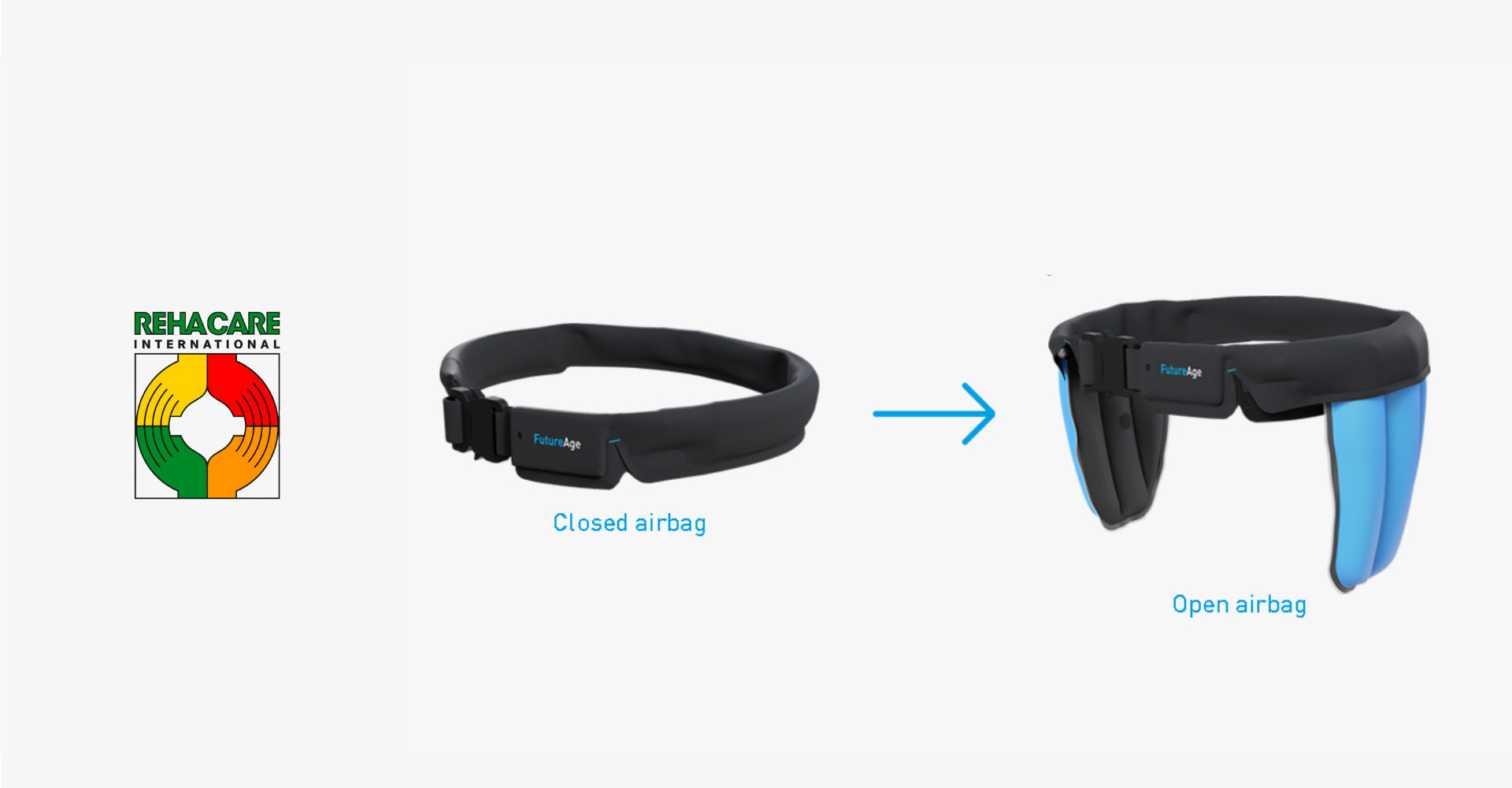
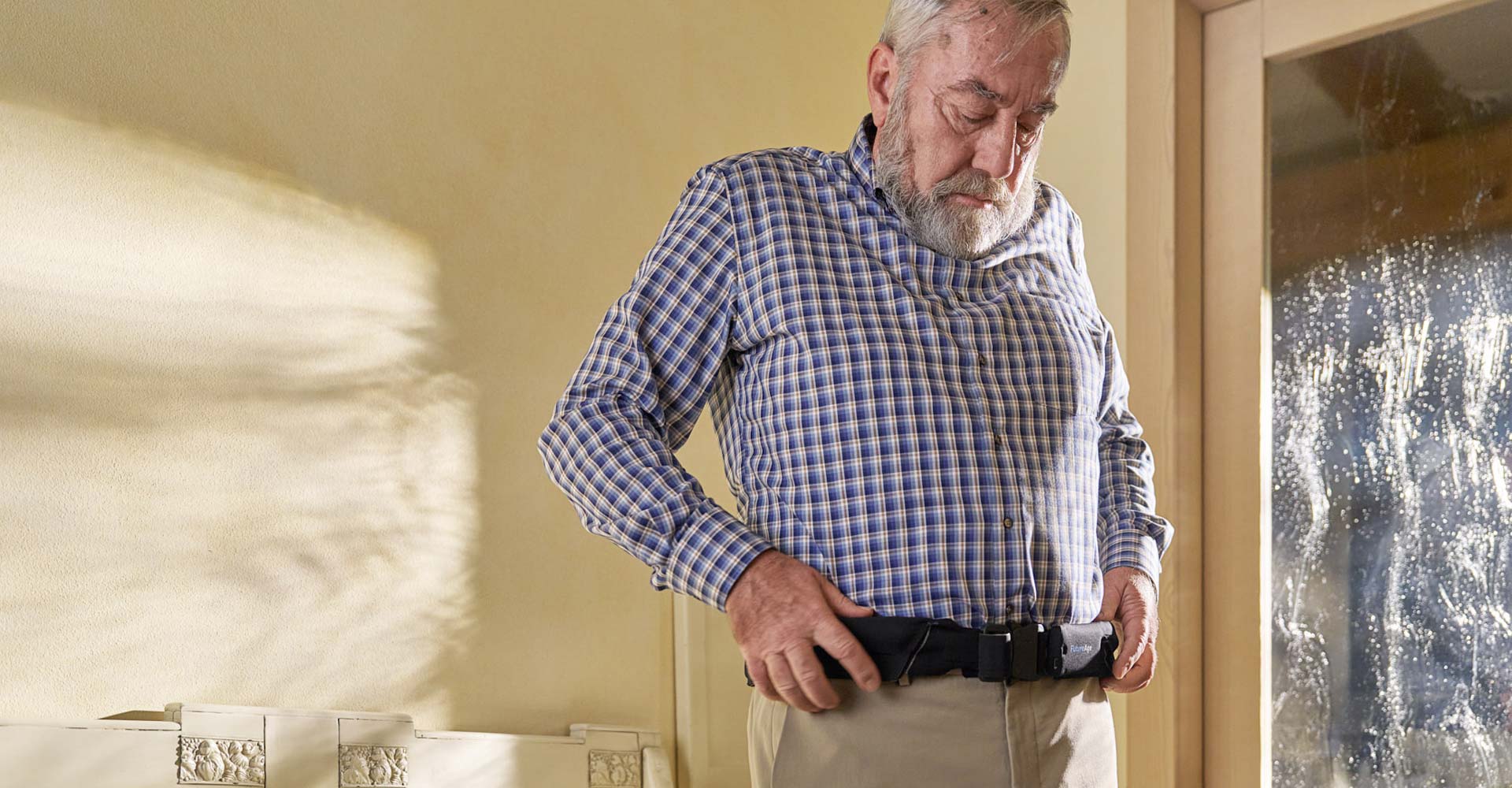
FutureAge is an elderly airbag belt designed for hip protection for falls in older adults. It activates in the event of a fall to reduce impact on one of the most vulnerable areas of the body.²
FutureAge can be used both in daily life and within rehabilitation pathways, particularly for frail patients, individuals at high risk of falls, those with a history of hip fracture prevention needs, or patients progressively regaining motor independence.
Within physiotherapy practice, this device does not replace therapeutic exercise, clinical supervision, or established fall prevention for seniors strategies.
Instead, it can act as a complementary tool in managing residual risk, helping professionals balance two essential needs: promoting movement while increasing patient protection during higher-risk moments.
Designed without compromising comfort and freedom of movement, the main benefits of this wearable airbag for seniors include:
- hip protection during physical activity and rehabilitation phases aimed at restoring independence
- automatic activation in case of a fall
- lightweight, non-intrusive design compatible with daily activities and therapeutic exercises
- support for residual risk management by enabling safer exposure to movement
In this perspective, FutureAge becomes a potential support tool in elderly fall prevention devices, helping reconcile two central goals of physiotherapy for elderly falls: promoting movement while increasing protection for frail patients.
Conclusions: protecting movement, not limiting it
Fall prevention for seniors presents a fundamental challenge: movement is both a preventive tool and a moment in which risk may occur.
For this reason, in geriatric physiotherapy, the goal is not to avoid every potentially risky situation, but to guide patients toward greater independence through conscious healthcare risk management.
Within this balance between functional recovery, confidence in movement, and protection of frail patients, solutions such as FutureAge can be integrated as additional support within a comprehensive rehabilitation pathway.
Want to integrate FutureAge into rehabilitation programs or receive technical information about the device? Contact us!
References
- Sherrington C, et al. Exercise for preventing falls in older people living in the community. Cochrane Database Syst Rev, 2019
- Cameron et al., Medical Journal of Australia, 2024
- Lachman et al., Journal of the American Geriatrics Society, 1998
- World Health Organization (WHO), WHO Global Report on Falls Prevention in Older Age, 2007